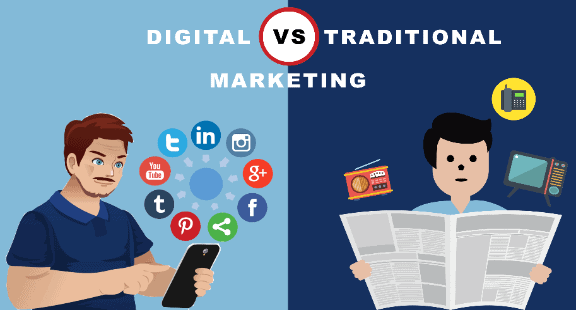
Marketing has undergone a massive transformation over the past two decades. What used to rely heavily on TV, radio, and print has now shifted toward digital platforms, data-driven strategies, and personalized communication. Understanding the difference between digital and traditional marketing is essential for businesses aiming to stay competitive in a fast-changing world.
Channels and Tools Used
Traditional marketing uses offline channels such as TV commercials, radio ads, newspapers, magazines, brochures, and billboards. These channels aim to reach a broad audience but lack precision. Digital marketing, on the other hand, uses online tools like social media platforms, websites, SEO, email marketing, content marketing, and paid advertising. These tools allow brands to reach the right audience at the right time.Click link
Targeting and Audience Precision
One of the biggest advantages of digital marketing is its ability to target specific audiences based on demographics, interests, behaviors, and even real-time actions. Traditional marketing cannot offer this level of precision, as it broadcasts messages to large groups without knowing exactly who is paying attention.
Cost, Budget, and Return on Investment (ROI)
Digital marketing is generally more cost-effective, offering flexible budgets and measurable ROI. Businesses can start with small amounts and scale up based on performance. Traditional marketing, however, often requires high upfront costs—especially for TV, print, and outdoor advertising—making it less accessible for small businesses.
Measurement, Analytics, and Performance Tracking
Digital marketing provides real-time analytics that show exactly how campaigns perform—clicks, impressions, conversions, engagement, and customer behavior. This allows marketers to optimize campaigns instantly. Traditional marketing lacks accurate measurement tools and relies on estimates, surveys, or delayed feedback.
Customer Engagement and Interaction
Digital marketing encourages two-way communication. Customers can comment, message, share, and interact with brands instantly. Traditional marketing is mostly one-way communication where the audience receives the message but cannot respond directly.
Speed, Flexibility, and Adaptability
Digital campaigns can be launched quickly and adjusted at any moment based on performance data. Traditional campaigns require longer production times and are difficult to modify once published, making them less adaptable to fast market changes.
Reach and Global Accessibility
Digital marketing allows brands to reach global audiences instantly, regardless of location. Traditional marketing is often limited to local or regional reach unless companies invest heavily in international media.
Conclusion: Which One Should Businesses Choose Today?
Both digital and traditional marketing have value, but digital marketing leads the modern business world thanks to its precision, lower cost, measurable results, and global reach. The most effective strategy today is a hybrid approach—using traditional marketing for broad awareness and digital marketing for targeted, data-driven growth.